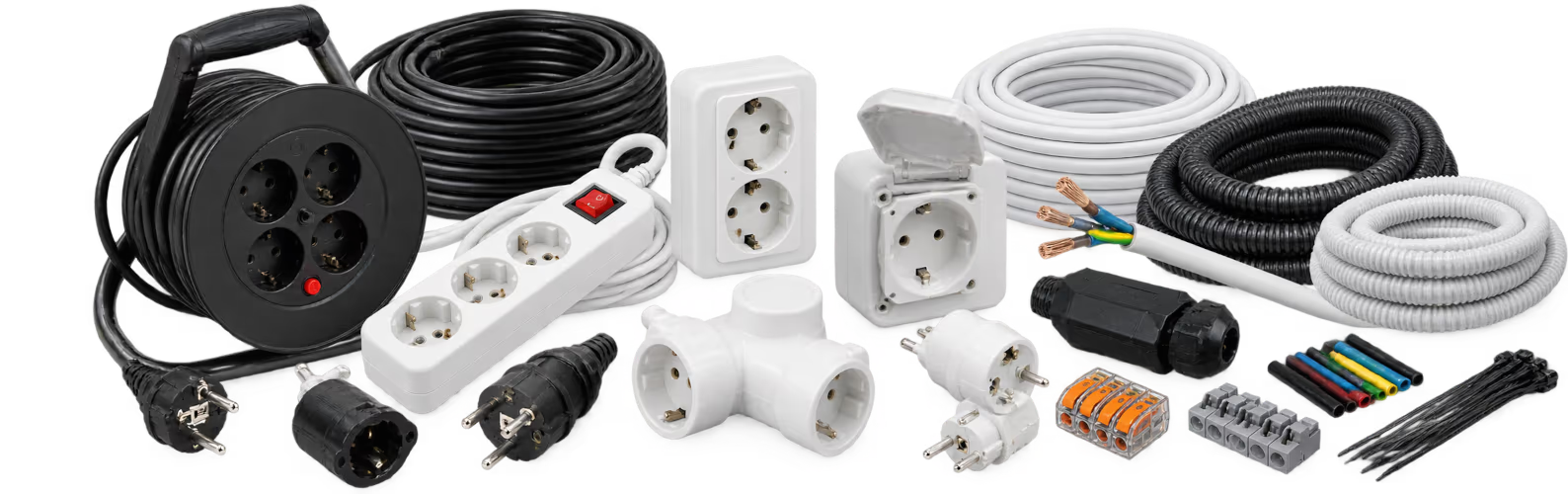
This is the invisible part of a grow room and at the same time the part where things can genuinely go wrong. A lamp, an extraction fan and a pump all hanging off one extension lead draw more than that lead is built for, and the first time you notice is rarely at a convenient moment. The parts here are the cheapest in your whole setup, measured against what they prevent at worst.
Work from continuous load, not from a peak
A grow room is unusual because its equipment runs for hours on end. A lamp on for twelve hours and extraction running twenty-four load a circuit very differently from a kettle drawing hard for two minutes. So add up what genuinely runs at the same time and treat that figure as a sustained load.
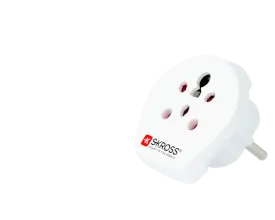
Split the load if it adds up to too much, rather than hanging a second block off the first. Adapters exist to make a device fit, not to multiply an outlet. If you are unsure whether your circuit can carry it, have an electrician check: this is the one part of a grow where finding out by trying is a bad idea.
Cable thickness and length matter more than expected
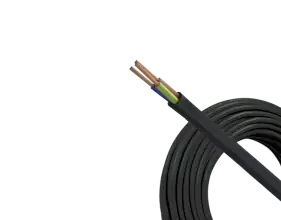
Power cables are sold here by the metre in two thicknesses, 1.5 and 2.5 mm². Heavier is not always necessary, but it becomes so as current rises or distance grows. Over a long thin cable the voltage drops and the cable warms up, and that heat is exactly the problem.
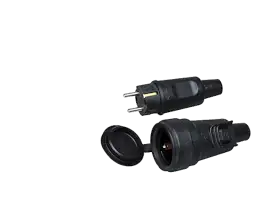
Two practical points. Keep a cable as short as the layout allows, because surplus length solves nothing and costs something. And always unwind a reel fully when something heavy is on it: coiled, the heat has nowhere to go, and that is where it fails. The plugs and appliance connectors for making a tidy lead yourself are sold separately.
In a grow room, water stands next to power
That combination is what makes this space different from a living room. You water, you fill a tank, runoff sits in a tray, and occasionally something leaks. So never leave connections on the floor; keep them above the level water can reach.
Give a cable a downward loop just before the connection as well. Water running along the lead then drips off at the lowest point instead of running into the plug. It costs nothing, and it is the only measure in this category you take with a flick of the wrist.
Batteries, and the part you hope never to use
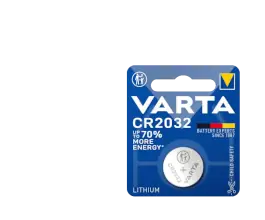
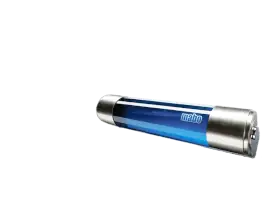
The batteries from Varta are for your meters, timers and thermo-hygrometers, including the coin cell many controllers and meters use. Small stuff you need at the moment a meter dies, which is usually just as you wanted to know something.
Alongside sit the fire extinguishers, including an automatic one that triggers on heat and so works when nobody is there. Check the label for which fire classes an extinguisher covers, because not every agent is usable on live equipment. Put it somewhere you can reach without walking past the problem.
Frequently asked questions
How many devices can I put on one circuit?
It depends on the circuit and on simultaneous draw. Add up what runs at the same time and treat it as a continuous load rather than a peak. If you come close to the limit, split across circuits and have it checked when in doubt.
Do I need 1.5 or 2.5 mm² cable?
Heavier becomes the better choice as current rises or distance grows, because a thin long cable loses voltage and heats up. For a short connection to a small device the thinner option is usually enough.
Can I use a coiled cable reel?
Not under a heavy load. Coiled, the heat cannot escape and the cable climbs in temperature. Unwind it fully, or use a lead cut to length.
Which fire extinguisher belongs in a grow room?
One rated for the fire classes you can expect here, including live equipment. That is stated on the extinguisher's own label. An automatic version has the advantage of triggering when nobody is in the room.
Which battery does my meter take?
Meters and pens usually take AA, AAA or a coin cell, and the device manual says which. Worth keeping a spare, because a flat battery means you cannot measure at the moment you wanted to.