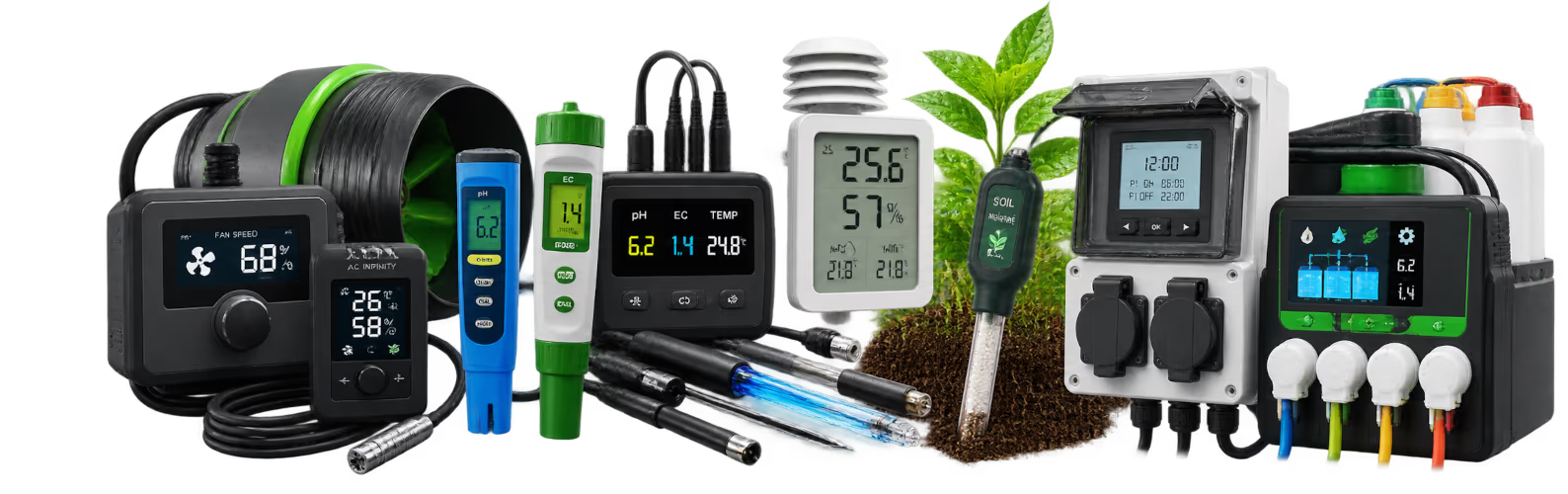
Measuring is the difference between knowing and guessing. A grow that disappoints almost always had a visible cause: a pH drifting off, an EC climbing while you changed nothing, or a night ten degrees colder than you assumed. This category holds two kinds of tool that are easily confused: the ones that measure, and the ones that act on the measurement.
Start with pH and EC
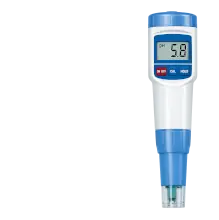
Those two decide whether your feed arrives at all. pH meters tell you what stays available, EC meters how much nutrient is in the water in total. Combo meters do both plus temperature in one unit, which saves handling if you are testing the same bucket anyway.
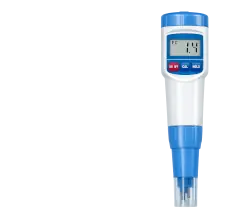
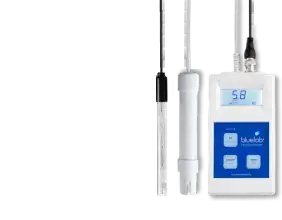
Bluelab and Milwaukee are the two standards here, from a pen you keep in a pocket to a monitor that lives in the reservoir. A pen measures when you remember to; a monitor measures when you are not there, and that gap is exactly where most problems happen.
An uncalibrated meter lies with confidence
This is the step most often skipped and the one that costs most. A pH electrode drifts slowly, and the awkward part is that it keeps producing a number while it does. You then steer firmly in the wrong direction, which is worse than not measuring at all.
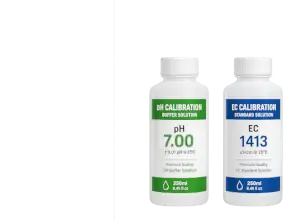
That is why calibration fluids sit here as a permanent group: pH 4.01 and pH 7.01 for a two-point calibration, and EC 1.413 or 2.77 for the conductivity side. Storage solution matters just as much. A pH electrode has to stay wet, and storing it dry is the fastest way to ruin one. Tap water and distilled water are not substitutes.
Measuring water is not measuring your pot
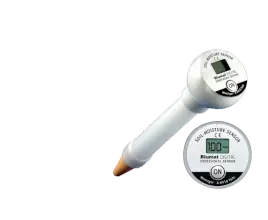
An ordinary pH pen is built for liquid. Push it into soil or coco and you get a poor reading and a damaged glass bulb. That is what soil meters are for, with a tip that tolerates substrate, alongside meters that read moisture and EC directly in the medium rather than in the runoff.
The same distinction explains a common question: why the EC in your pot is higher than in your watering can. Water evaporates and is taken up, salts stay behind. Your EC rises without you feeding more, and measuring only at the input tells you nothing about it.
Control is a second kind of tool
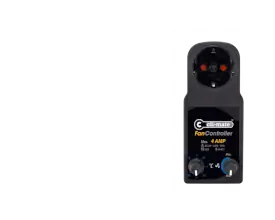
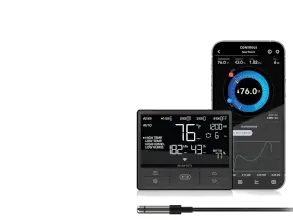
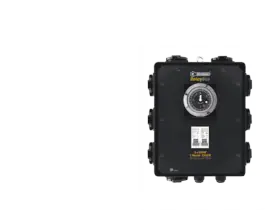
A reading that triggers nothing is only information. Fan controllers set the speed of an inline fan so it is not running flat out around the clock. Climate controllers go further and drive that speed from temperature or humidity, so extraction steps back on its own as the room cools. That saves noise, power and wear at the same time.
SMSCOM, Cli-Mate, Fertraso and AC Infinity cover this range. Choose on amperage rather than on how many devices you want to attach: a controller is sold as 3, 4, 7, 8, 12 or 16 A, and that figure is the limit. Add up what you intend to plug in first. Alongside sit the switch boxes, for running a lamp and a pump on a timer without the extraction going with them.
The small tools that set your accuracy
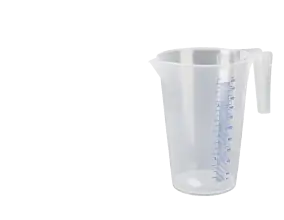
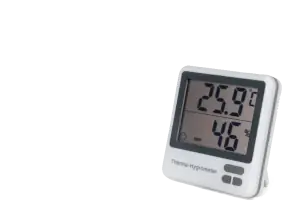
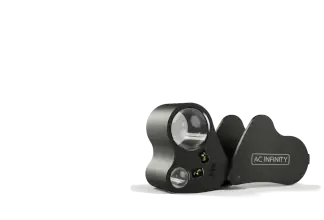
A measurement is never better than the dose behind it. Measuring jugs from 50 ml to 3 litres, dosing syringes and pipettes sit here because a schedule is written in millilitres, not in splashes. Alongside them are thermo-hygrometers that remember a minimum and maximum as well as the current reading, which is the only way to see what happened overnight, microscopes for looking at a leaf closely, and dosing computers for recirculating systems.
Frequently asked questions
How often should I calibrate a pH meter?
Follow the manufacturer's interval, and calibrate whenever a reading makes you doubt it. An electrode drifts gradually, so you notice it in your plants rather than in the device. A two-point calibration at 4.01 and 7.01 is more accurate than a single point.
Why does my EC climb when I have changed nothing?
Because water leaves and salt stays. The plant takes up water faster than it takes up nutrient salts, and the rest evaporates, so concentration rises on its own in both a pot and a reservoir. Measure in the medium or in the runoff, not only in what you pour in.
Can I use a normal pH pen in soil?
Not directly. A standard electrode is made for liquid and is damaged by substrate. Use a meter built for soil or for multiple media, or test the runoff instead.
How do I store a pH electrode?
Wet, in storage solution. Storing it dry is the most common way to destroy one, and distilled water is not a substitute: it pulls ions out of the bulb.
What amperage does my controller need?
Add up the draw of everything you plan to connect and choose above it. The figure in the product name is the controller's limit, not a hint about how many devices will fit.
What is a good EC value?
There is no standalone answer. It depends on your medium, your stage and your brand's schedule, and those schedules state a range themselves. The meter exists to keep you on that schedule, not to hit a universal number.