

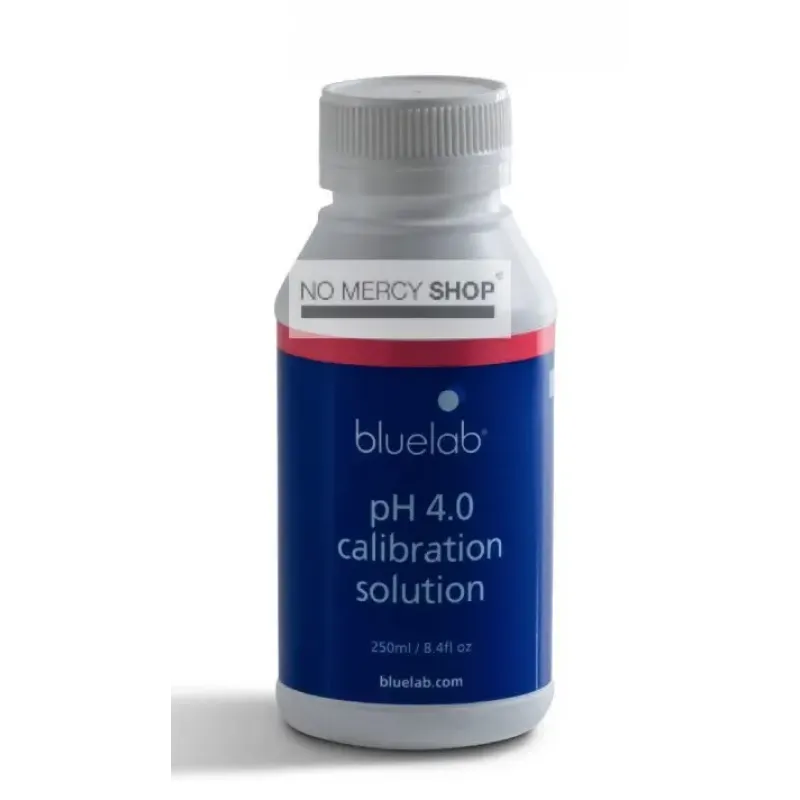
Bluelab PH 4.0 calibration solution 250 ML
pH 4.0 in a 250 ml bottle.
- Bluelab
- Model: 5073
- EAN: 9421024921149

QUALITY

PAYMENT

SHIPPING

PACKAGED
Carefully selected products.
Fast and secure checkout experience.
EU-wide delivery from trusted stock.
Carefully and discreetly packaged.
A 250 ml bottle of Bluelab pH 4.0 buffer. The second calibration point, and your best diagnostic tool at the same time.
"It will not calibrate" is a diagnosis, not a fault
Sooner or later it stops working: your meter will no longer come onto value in 4.0 buffer. It feels like a defect, but it is in fact the most useful signal your meter can give you, and where it fails tells you what is wrong.
7.01 works, 4.0 does not. Your zero point is still fine but the slope has drifted: the ratio by which the electrode turns voltage into pH units. This is the classic picture of an aged glass membrane. Clean the electrode first and try again; if that does not help, the probe is finished.
7.01 no longer works either. Then the problem is deeper: often a contaminated or dried-out reference. A few hours standing in KCl storage solution sometimes brings such a probe back surprisingly well.
It works, but slowly. The value creeps for minutes before settling. That is a probe near the end of its life; it still measures, but sluggishly, and in practice you read it too early.
It works one day and not the next. Look at your buffer first: an old, opened bottle is as much a suspect as your electrode.
Why this works as a diagnosis: an electrode never reports an error. It carries on producing tidy numbers until you hold it against a known value. Calibration is not just adjustment: it is the only inspection you have.
Technical Specifications:
- Value: pH 4.0
- Volume: 250 ml
- Brand: Bluelab
- Use: second calibration point, after 7.0
Frequently asked questions
My meter just misses 4.0: is that a problem?
A small difference is normal and is what calibration corrects. If the meter cannot be brought onto it at all, it is time for a new electrode.
Clean first or calibrate first?
Clean first, then calibrate. The other way round you calibrate the fouling in.
Why 4.0 rather than 10.0?
Because your working range is on the acidic side of 7. A reading is most accurate between your two calibration points.

across Europe

Top brands

across Europe
Top brands