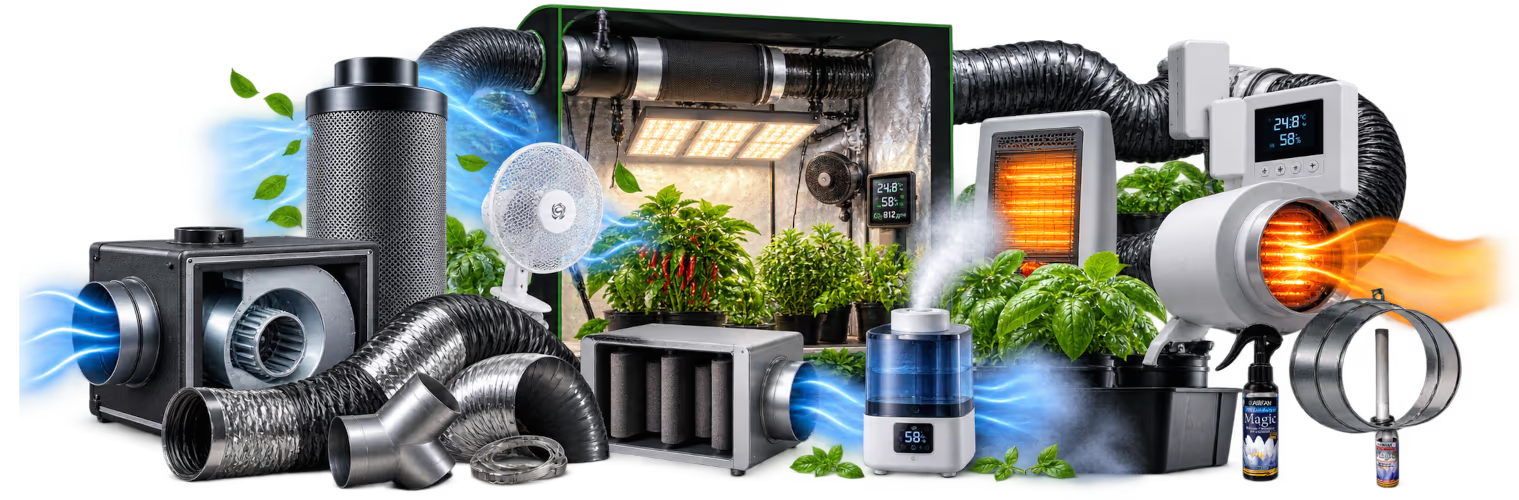
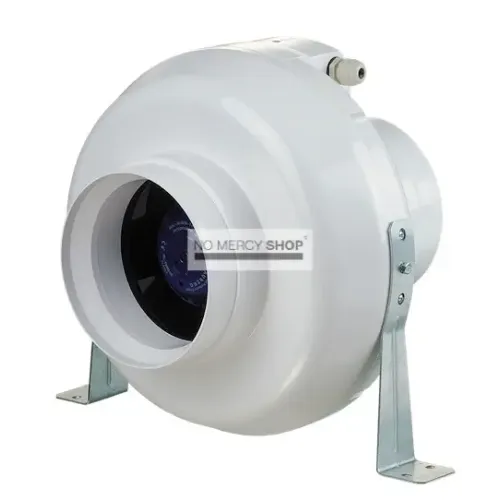
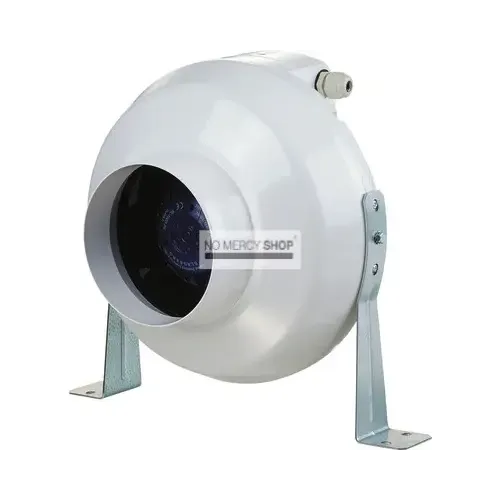
At 100x100 you step up to Ø 125 mm, which is also the deepest size in the range: both fans and carbon filters offer a wider choice here than at any other diameter. What really sets this tent size apart is where it stands. A 100x100 fits in a bedroom or a storage room, and then noise counts from the start.
Fan and filter come in the same size
You need no reducer here. Ø 125 mm holds plenty of carbon filters, from the Prima Klima Eco and Industry lines to the smaller Can-Lite sizes and the Can-Filters Inline. Keep the whole chain on one size, because every step in diameter costs pressure you do not get for free at this scale.
Choose the fan on what will hang off it
The Can-Fan RK 125 L does 350 cubic metres per hour and the RK 125 LS 370, alongside Vents in centrifugal, axial and mixed-flow versions and the Quietline built around silence. Allow for the filter before you choose: a fan that delivers exactly enough bare is too small with a filter and a silencer on it. Buying generous and turning it down is almost always the better call here.
Noise, because this tent is indoors
This size has both a 45 cm Can-Fan silencer and the G-Tools silencer, and acoustic ducting as well. There are three ways to get it quiet and they stack: turning it down costs nothing, a silencer catches the airborne noise, and hanging the fan loose or fitting a rubber sleeve catches the vibration that would otherwise travel through your tent frame into the room.
Or fan and filter in one purchase
Because Ø125 is so common, complete combinations are supplied on it. The G-Tools kits pair a fan with a Prima Klima filter, with or without a controller and in one version with a silencer included. That saves working out whether the connection sizes line up.
Frequently asked questions
Do I need a reducer for my filter?
No. There are plenty of filters in Ø125, so fan and filter connect directly.
Is Ø 125 mm enough for a 100x100?
Yes, this is the size the tent is meant for. If the room runs warm or carries a lot of light, look at Ø 150 mm.
What helps most against noise?
Turning it down, because a fan at full power is loudest. Then a silencer, and if you still hear it after that, the noise is in your structure rather than in the air.