Climate is where most setups come undone, and rarely because too little was bought. A fan, a filter and a length of ducting form one system, and that system always delivers less than the figure on the box. This is by a distance the largest category in the shop, because every part has to match every other in size.
The number on the box is free air
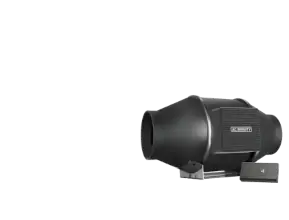
A fan is rated with nothing attached to it. Hang a carbon filter in front and a few metres of ducting behind, and capacity comes off. Every bend costs, every metre of flexible ducting costs more than smooth pipe, and a filter costs progressively more as it loads. So expect your real airflow to sit below the rating, and do not buy exactly at the limit.
That is also why a sharp bend immediately behind the fan does so much damage: the airflow there has not settled yet. A straight run before you turn costs nothing and buys you more than going one size up.
Work backwards, not from the duct size
The order is: room volume first, then how many times an hour that air needs replacing, then the airflow in cubic metres per hour, and only then the diameter that goes with it. Start at the other end and you pick 125 mm because it is common, then find the fan that fits it is too small.
You can filter on both here. By airflow: up to 250, 250 to 400, 400 to 700, 700 to 1000, 1000 to 1500 and from 1500 cubic metres per hour. Or by diameter: 100, 125, 150, 160, 200 and 250 mm. Pick diameter last and keep it constant down the line, because every reducer is more resistance.
Size the filter larger than the fan, never smaller
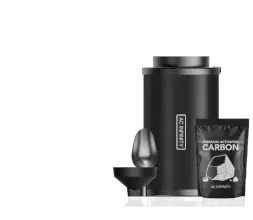
With a carbon filter the reasoning runs opposite to the fan. Air has to stay in contact with the carbon long enough to give up its odour. Push too much air through too small a filter and it passes faster than the carbon can work, so you smell it while the filter still looks new.
Mount the filter on the intake side, ahead of the fan, so all the air you extract is forced through it. Can-Filters, Prima Klima, AC Infinity and G-Tools cover the range here. A filter is a consumable: the carbon exhausts, and the only reliable signal is that you start to smell something.
Extraction and circulation are two different jobs
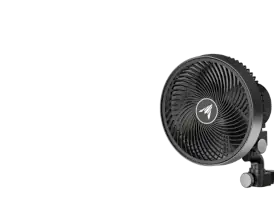
This is the pair most often confused. An inline fan moves air out of the room and replaces the whole volume. A circulation fan exhausts nothing: it moves the air already there, breaks the still layer sitting against the leaf and evens out the temperature between the top and bottom of a tent. You need both, and neither substitutes for the other.
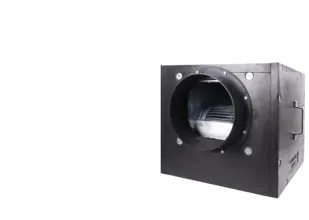
Vents has the widest inline range, Can-Fan names its models after their capacity so you choose on figures, and AC Infinity builds the control into the fan. The extractor fans are box units, with the fan already inside an insulated housing.
Noise is a decision you make in advance
A fan at full speed is a fan at its loudest, so the first gain is in turning it down rather than boxing it in. That equipment lives in Measuring & Control, under fan controllers and climate controllers, not here.
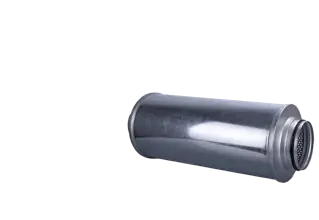
What is here: silencers fitted into the duct run, plus insulated units and box fans that solve it in one purchase. Bear in mind a silencer adds resistance of its own, so include it in the calculation rather than hanging it on afterwards.
The rest of the system
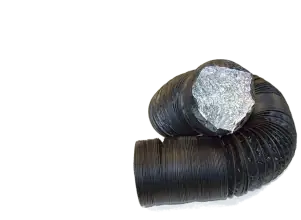
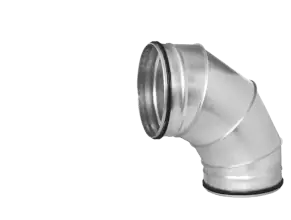
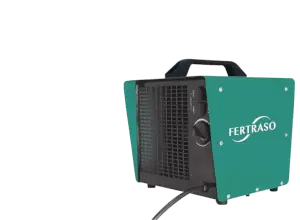
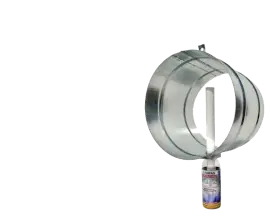
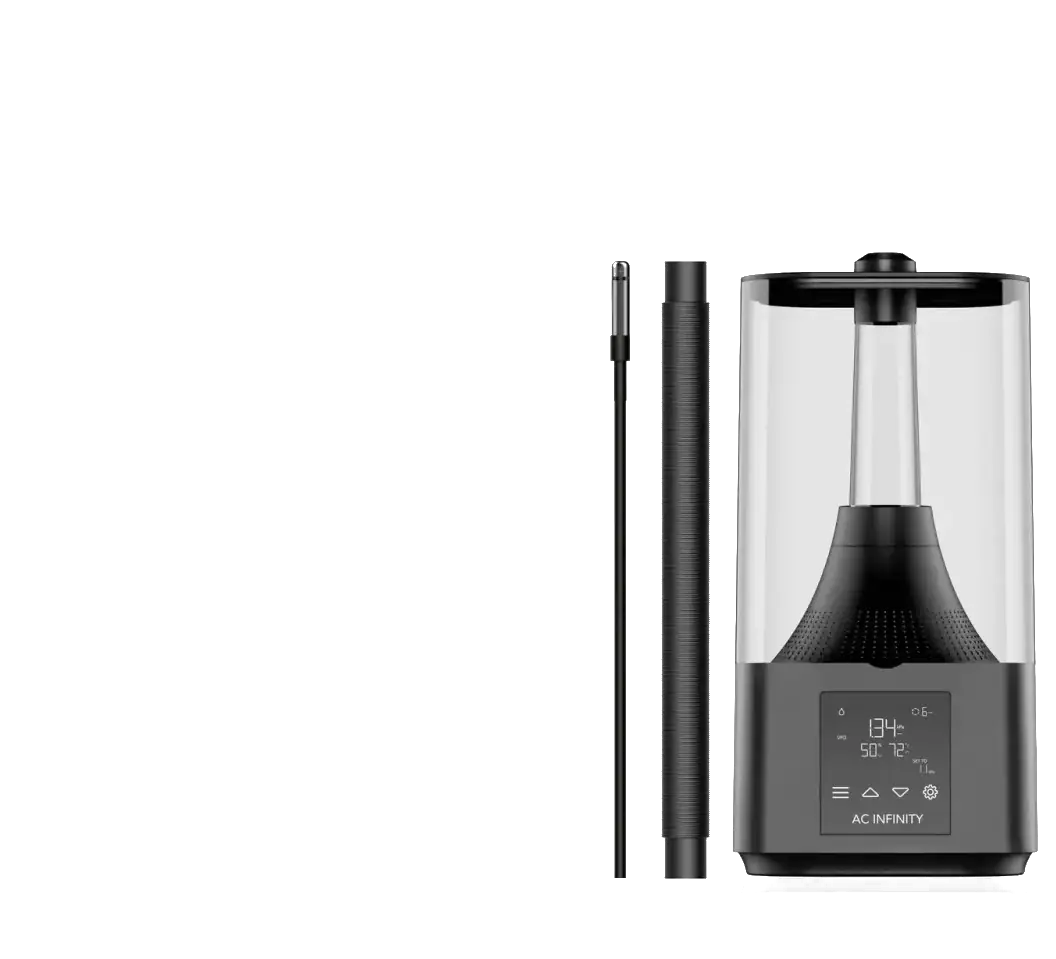
Ducting in insulated and uninsulated form, ventilation parts such as clamps, reducers and flanges, odour control from Airfan and Nilco for the smell that does not travel through your extraction, heating for a room that drops too far overnight, and humidification for air that runs too dry.
Frequently asked questions
What diameter do I need?
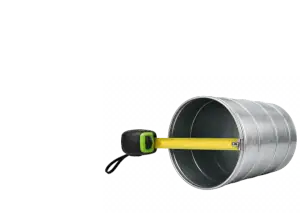
Choose it last. Work out the airflow your room asks for, pick a fan for that, then take the diameter that fan uses. Keep filter, ducting and silencer at the same size, because every reducer costs pressure.
Should extraction run at night?
Yes. Without air exchange the temperature climbs and moisture sits, and the dark period is exactly when that turns into mould. Turning the speed down is fine; switching it off is not.
Does the filter go before or after the fan?
Before it, on the intake side, so all the air you extract has to pass through. Mounted after the fan, the duct between them is under pressure and odour escapes at every seam.
Why does my fan not reach its stated capacity?
Because that rating was measured with no filter and no ducting. Filter, bends, length and silencer all cost pressure. It is not a fault; it is the reason to buy above your calculation.
How do I know my carbon filter is spent?
By smell, which is its weakness. The carbon saturates without the filter looking any different. Work from the service life the manufacturer states and replace sooner if odour returns.
Do I still need a circulation fan if extraction is good?
Yes. Extraction replaces the air in the room but does not move it past every leaf. Without circulation a still layer stays against the leaf surface and the top of the tent runs hot.