

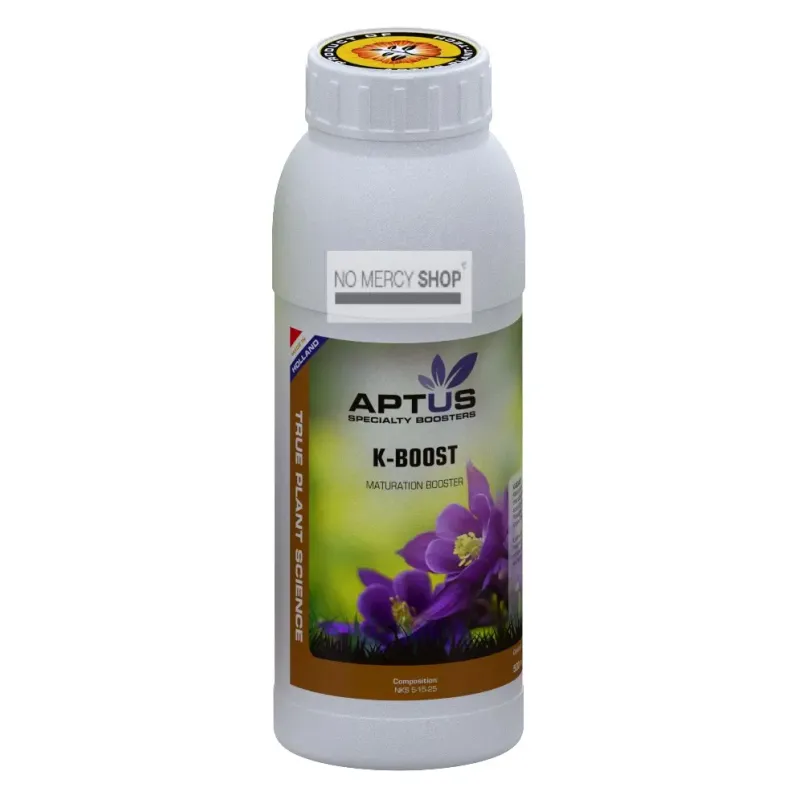
Aptus - K-Boost
Ripening stimulator with potassium and sulphur trioxide, 30 to 50 ml per 100 litres. Weeks five to seven.
- Aptus
- Model: f103400
- EAN:

QUALITY

PAYMENT

SHIPPING

PACKAGED
Carefully selected products.
Fast and secure checkout experience.
EU-wide delivery from trusted stock.
Carefully and discreetly packaged.
A ripening stimulator with potassium, sulphur trioxide and L-amino acids. 30 to 50 ml per 100 litres, from week five to week seven of bloom.
Potassium is about water first and weight second
Potassium is sold as the element of heavier tops, and in the end that holds. But the route there runs through something else: the plant's water balance.
Aptus call it osmoregulation, and the mechanism is concrete. Potassium governs the opening and closing of the stomata. With a potassium shortage those stomata do not work properly and the plant loses water, including at moments when it should not be. A plant leaking water on a hot day is doing nothing but surviving.
That is where the weight comes from. Not because potassium is heavy in itself, but because a plant with a working water balance can hold its stomata open when it can afford to and shut when it must, and spends that time on photosynthesis rather than on limiting damage.
What potassium does besides
Aptus name two things that matter during ripening: potassium promotes starch and protein synthesis, and it regulates enzyme activity.
Starch is storage. In the final weeks the plant moves sugars to where they have to end up and fixes them there, and potassium is what drives that transport. That is why a potassium feed late in the cycle earns its place and an early one earns much less.
The sulphur is not incidental
Alongside potassium, K-Boost contains sulphur trioxide. Aptus say of it that sulphur is used in the ripening process and increases weight.
Sulphur is also the element behind a large part of the aroma and flavour compounds plants make, so in a ripening product it is a logical partner to potassium rather than a filler.
Give it together with calcium and magnesium
This is the most important instruction on this page and it comes from Aptus themselves: use K-Boost in combination with CaMg-Boost, both to raise weight and firmness and to prevent the antagonism between potassium and magnesium.
That antagonism is real. In Aptus's own table, an excess of potassium displaces nitrogen, calcium and magnesium alike. So you can create a magnesium deficiency with nothing wrong with your magnesium feed, simply by pushing hard on potassium during ripening.
The result shows on the leaf and is easy to misread as a shortage calling for more magnesium, when it is calling for less potassium.
In use
Shake well before use. Mix 30 to 50 ml per 100 litres of water, that is 3 to 5 ml in 10 litres, from week five through week seven of bloom.
Aptus advise using it through the last four weeks for a compact, firm end product. Fully water-soluble, leaving no residue in the irrigation system.
Available sizes
| Size | Price |
|---|---|
| 500 ml | € 23.50 |
| 1 liter | € 41.95 |
| 5 liter | € 181.50 |
Technical Specifications:
- Type: organo-mineral ripening stimulator
- Manufacturer: Aptus
- Contains: potassium (K), sulphur trioxide (SO3), organic nitrogen (N), L-amino acids
- Dosage: 30 to 50 ml per 100 litres of water
- Period: weeks five to seven of bloom
- Combine with: CaMg-Boost, against the potassium and magnesium antagonism
- Solubility: fully water-soluble, leaves no residue
- Predecessor: P-Boost, to week six of bloom
- Before use: shake well
Frequently asked questions
Why only from week five?
Because potassium has most of its work to do during ripening: moving and storing sugars. Early in bloom the plant gets far less out of it.
Why should I add CaMg-Boost?
Because an excess of potassium displaces magnesium and calcium. Aptus recommend the combination explicitly to prevent that.
My leaf is discolouring although I feed enough magnesium.
Then look at your potassium. Displacement looks the same as a shortage, and the answer is less potassium rather than more magnesium.
What is the sulphur for?
Aptus state that sulphur is used in the ripening process and increases weight.
How much is that in a 10 litre tank?
3 to 5 ml.

across Europe

Top brands

across Europe
Top brands