Nutrients are where you see the fastest gain and make the fastest mistake. A plant does not take up what is in the bottle, it takes up what stays available at the pH of your water. That is why pH control sits in this category next to the feed itself rather than off in a corner.
Your medium picks your nutrient line
Soil, coco and hydro ask for different compositions, and that is chemistry rather than marketing. Potting soil already carries nutrition and holds pH within a margin, so you feed less and a slip is partly absorbed. Coco is inert: it holds water like soil but feeds nothing, so every watering is a full feed, and coco also binds calcium and magnesium that you top up separately. In hydro nothing sits between the root and the nutrient solution, so you can steer faster and a mistake shows faster too.
So choose the medium first and the bottle second. The lines per medium sit under Soil, Coco and Hydro. A soil feed used on coco underdelivers, and a coco feed used in soil overfeeds it.
A complete base first, additions after
A base nutrient supplies every element a plant needs in the ratio that suits the stage: nitrogen for growth, phosphorus and potassium for bloom. That is the foundation, and on its own it is enough to run a cycle. Everything beside it solves one specific problem, so it should wait until you know which problem that is.
The order that works in practice: start with a complete nutrient line or one of the starter kits, where the manufacturer has already matched the parts. Then add at most a root stimulator for the first weeks, and a booster in the back half of bloom. Anyone on soft water, on coco or under LED will almost always want CalMag alongside.
The brands, and where they actually differ
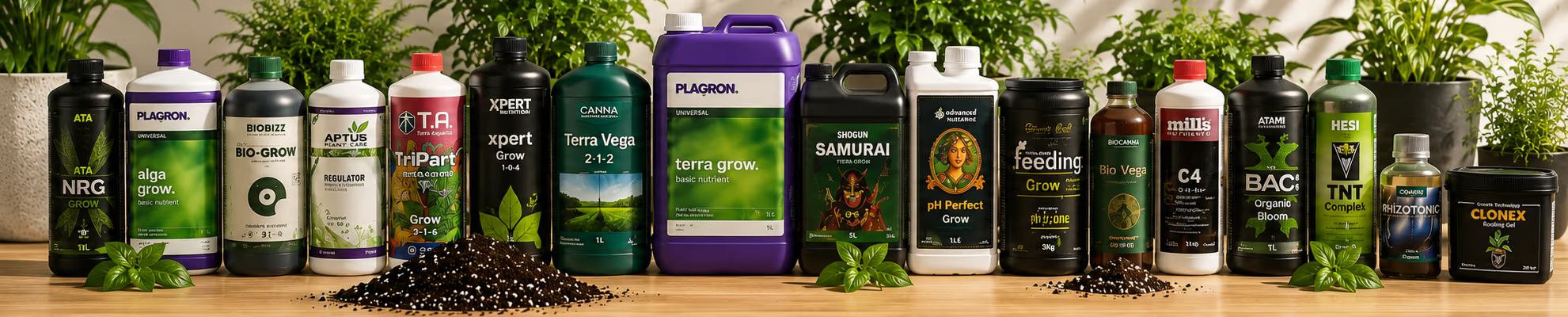
Canna runs a separate line per medium, Terra, Coco, Hydro, Aqua and COGR, and is the only brand here that also sells single elements on their own: nitrogen, phosphorus, potassium, calcium, magnesium and iron as individual bottles, plus the organic Biocanna line. Atami puts the Ata line beside B'cuzz, with an A+B per medium and a matching booster, and offers the base as a powder for anyone who prefers to mix their own. Plagron works with two complete routes, a mineral terra line and a fully natural one, both also sold as a ready-made box.
Hy-Pro gives each medium its own root stimulator and offers discovery packs for trying a line before committing. Bio G Power is a Dutch line that carries one-part feeds alongside the A+B, useful if you want as few bottles as possible. Aptus works differently from the rest: heavily concentrated and targeted per element, meant to correct a shortage without shifting your whole schedule.
pH and EC are the tools, not the nutrient
Two measurements decide whether your feed arrives. pH governs what stays soluble: run it too high and the iron is in your water but out of the plant's reach, and you see a deficiency that is not one. Soil is usually held slightly higher than coco and hydro, and your manufacturer's schedule names the target range. EC tells you how much nutrient is in the water in total, so whether you are feeding light or heavy.
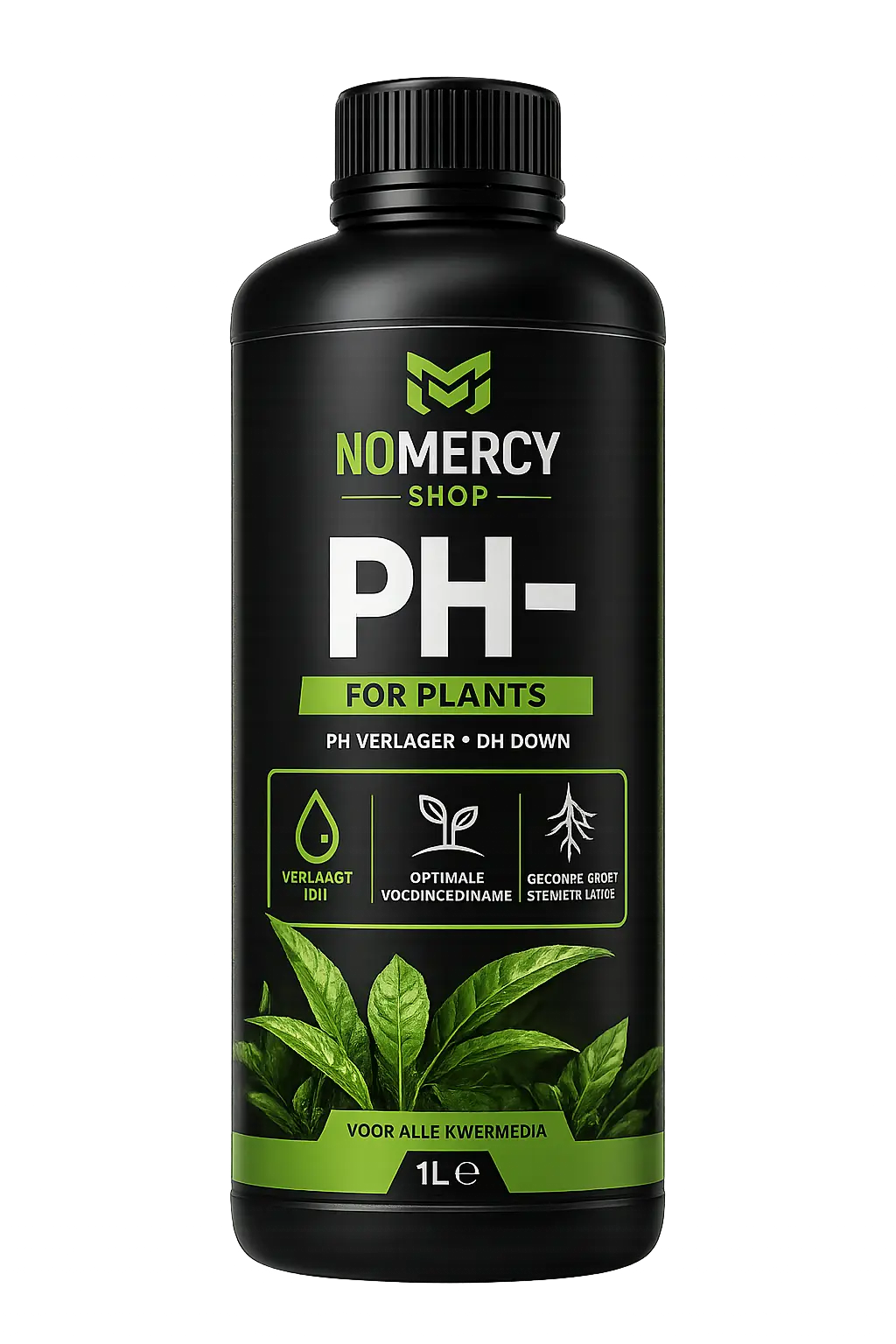
You correct with pH control and measure with the meters under Measuring & Control. Always measure after mixing the nutrient rather than before, because the nutrient moves the pH itself.
The additions, and what they actually do
A root stimulator earns its place in the first weeks, when the root system is the ceiling on everything that follows. Boosters is a collective name for four different things: a PK feed around the bloom peak, a bloom stimulator working on flower set, a silicon product stiffening cell walls, and a single-element boost. Enzymes break down dead root material so the substrate stays open and reuse becomes realistic. System cleaning belongs to anyone recirculating water, because scale and biofilm block drippers before you notice.
Also here: foliar feed for correcting quickly through the leaf, organic nutrients that feed the soil life rather than the plant directly, single elements for anyone running their own schedule, and trace elements for shortages measured in fractions.
Frequently asked questions
Can I mix brands?
Not for the base feed. A line is calculated as a whole, and combining two bases gives a ratio nobody designed. Using an addition from another brand alongside a base line is common and works fine in practice, as long as you are not stacking two products that do the same job.
What is the difference between A+B and a one-part feed?
In an A+B, elements that would react with each other at concentration are kept in two bottles and only meet in the water. So add them separately and stir in between, never A and B undiluted together. A one-part feed is less work and gives you less control.
Do I need CalMag?
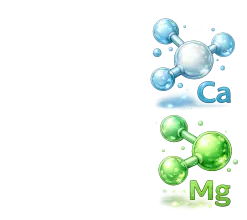
On coco, almost always, because coco binds calcium and magnesium. Also on reverse osmosis or other soft water, where those elements are simply absent, and often under LED. On tap water in soil, usually not.
Do I need to check pH if I just use tap water?
Yes. Tap water varies by region, and your nutrient shifts the pH on its own, so the reading at the tap says nothing about the reading in the can. Measure after mixing.
Where do I start if I have never fed before?
A complete line or a starter kit for your medium, plus a pH meter. That is the minimum that will carry you through a full cycle. Everything after that, buy when you have the problem it solves.