

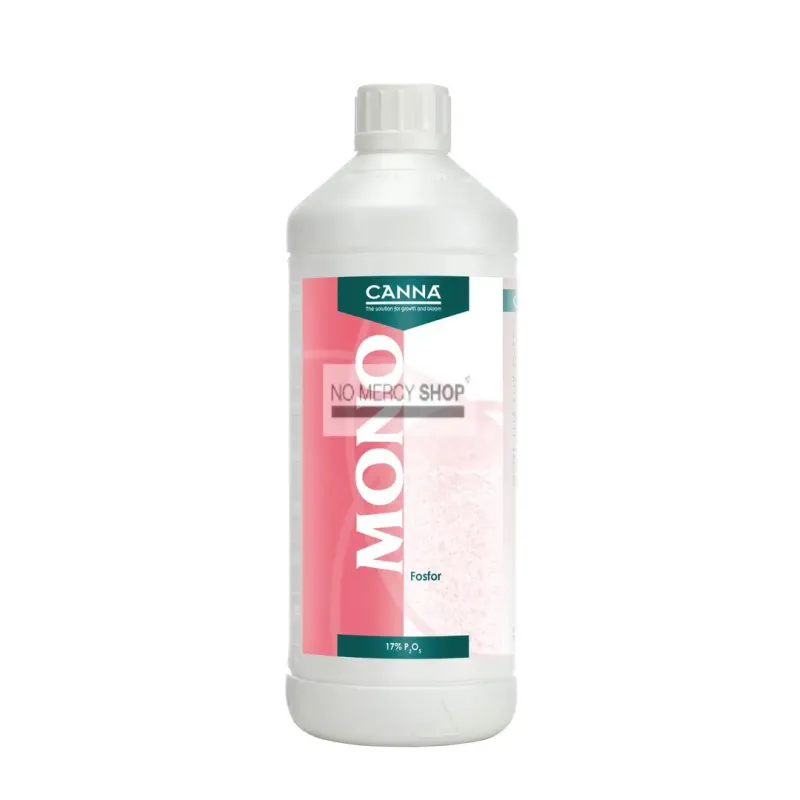
Canna - P 17% Phosphorus
Phosphorus on its own, 17% as P2O5. Measure your pH first: above 7 it precipitates.
- Canna
- Model: f800320
- EAN: 0753321680863

QUALITY

PAYMENT

SHIPPING

PACKAGED
Carefully selected products.
Fast and secure checkout experience.
EU-wide delivery from trusted stock.
Carefully and discreetly packaged.
A single-element phosphorus fertiliser with 16.6% phosphorus pentoxide, NPK 0-17-0. For correcting identified phosphorus deficiencies or supporting flowering. 1 to 2 ml per litre.
Measure your pH before you start on this
Phosphorus is the element where a visible deficiency is most likely not to be a deficiency at all. In most cases the phosphate is sitting right there in the pot and the plant cannot reach it.
That is because phosphate is strongly pH-dependent. Let your root-zone pH climb above roughly 7 and phosphate binds to calcium as compounds that do not dissolve. Let it drop well below 5.5 and the same happens with iron and aluminium. Either way the phosphate is present, measured and paid for, and still unavailable. Uptake is best between about 6.0 and 7.0 in soil, and somewhat lower in coco and hydro.
Add phosphorus in that situation and most of it precipitates just as hard as what was already there. You have raised your EC, increased your salt load and left the problem untouched.
So the order is: measure the pH of your feed water and, if you can, of the run-off, correct that first, and look again. If the picture persists, a standalone phosphorus bottle has its place.
And count what you are already feeding
Phosphorus is also the element that most often arrives from several sources at once. Your base feed contains it, your PK booster is largely made of it, and if you use a phosphoric acid pH reducer then every correction adds more.
Before opening a standalone bottle it is worth adding those three together. In the weeks you are feeding a PK, an extra phosphorus source is rarely what is missing, and an excess of phosphate actually suppresses zinc and iron uptake.
Mixing
This bottle must absolutely not meet a calcium-bearing fertiliser in concentrated form. Phosphate and calcium form insoluble calcium phosphate, the same reaction that produces the hard white scale in your lines.
So add it to a reservoir already full of water, stir through, and bring your calcium in at a different moment. Dose 1 to 2 ml per litre of tap water.
Technical Specifications:
- Type: single-element mineral fertiliser, liquid
- Manufacturer: CANNA
- Registration: NPK 0-17-0
- Content: 16.6% phosphorus pentoxide (P2O5), water soluble
- Mind the unit: the figure is P2O5, not elemental phosphorus
- Dose: 1 to 2 ml per litre of tap water
- Mixing: never mix in concentrated form with calcium-bearing fertilisers
- Volume: 1 litre
Frequently asked questions
I see a phosphorus deficiency, should I feed this?
Measure your pH first. Above roughly 7 phosphate precipitates with calcium, and well below 5.5 with iron. Then the phosphate is there but the plant cannot reach it.
Is 17% the same as 17% phosphorus?
No, the figure is P2O5. Elemental phosphorus is considerably lower. Watch for that when comparing brands.
Do I need this alongside my PK booster?
Usually not. A PK is largely phosphate, and with a phosphoric acid pH reducer more arrives with every correction.
Why can it not meet calcium?
Phosphate and calcium form insoluble calcium phosphate. That is the same precipitate that makes the hard white scale in lines.
Can too much do harm?
Yes. An excess of phosphate suppresses zinc and iron uptake.

across Europe

Top brands

across Europe
Top brands