Your medium is not a surface to grow on. It is the choice that fixes your whole feeding schedule: how much buffer you have, how often you water, and how fast a mistake shows up. Pick it before you pick a bottle of nutrient, because the nutrient follows the medium and not the other way round.
Buffer is what really separates the media
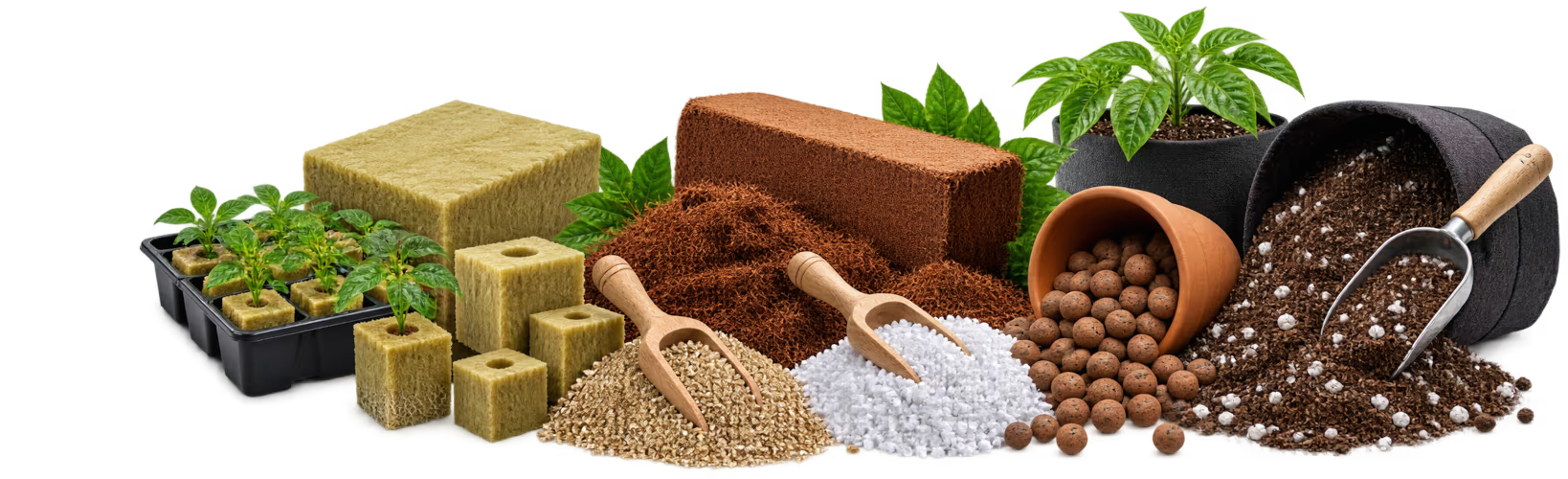
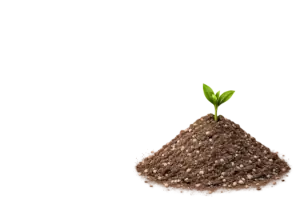
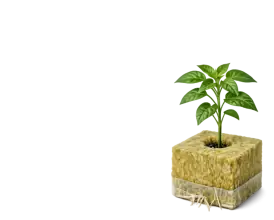
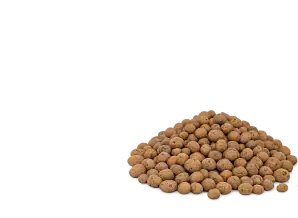
Potting soil carries its own nutrition and holds pH within a margin, so one heavy feed is partly absorbed. Coco holds water like soil but feeds nothing: it is inert, so every watering is a full feed. Coco also binds calcium and magnesium to itself, which is why you top those up separately. Rockwool has almost no buffer and reacts fastest to whatever you give it, for better and for worse. Clay pebbles hold hardly any water and belong to a system that keeps feeding on its own.
In practice: the less buffer, the more often you measure and the smaller each correction should be. In soil you can run a week with a pH slightly off target. In rockwool the same gap shows in the plant within two days.
The biggest group here is not a medium, it is the start
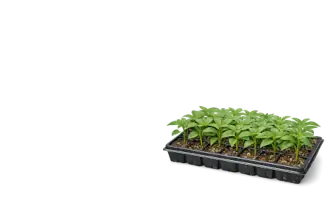
Propagation is the widest group in this category, and that is no accident. The medium matters most at seeding and cutting: a seedling in an oversized pot sits in too much wet substrate and builds too little root. So you work small, plugs and tablets in a tray, with a dome over the top holding humidity up until roots appear. Rooting powder, rooting gel and a leaf spray sit in the same group, because until there is a root a cutting can only take up moisture through the leaf.
Additives change your substrate, not your plant
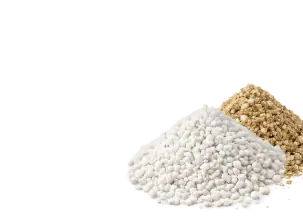
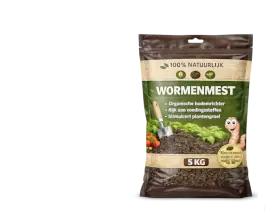
Substrate additives do different work from nutrients. Perlite opens a mix so oxygen reaches the roots. Worm castings and guano add slow organic matter to the pot. Mycorrhiza is a fungus that attaches to the root and widens the area it can draw from. Some are mixed through the substrate before planting, others are made to go in with the water, so read the label for which. Nutrients themselves are not here but under Nutrients.
What is here, and what deliberately is not
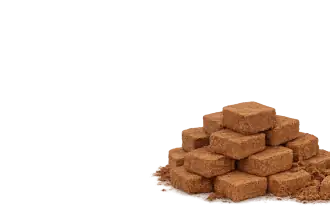
This is a narrow category on purpose. It holds the media plus everything you need to start in them, mostly from Plagron and Growth Technology, with rockwool from Agra-Wool and Grodan and propagators from Garland. Coco is stocked as a compressed brick rather than a ready bag: it takes less storage space and you soak it only when you need it. If you would rather skip the soaking, soil is the route.
Frequently asked questions
Which medium should I choose for a first grow?
Potting soil. It buffers on its own and forgives a slip in feed or pH, where coco and rockwool charge you for it immediately. Move on once you trust your schedule and your meters.
Why does coco need extra calcium and magnesium?
Coco binds calcium and magnesium to itself, leaving the plant short. That is why almost every coco schedule names a CalMag. Those sit under CalMag.
Can I reuse potting soil?
Partly. After a cycle the structure has compacted and the nutrient reserve is spent. If you do reuse it, mix perlite through for air, add organic matter back, and use enzymes to break down old root material.
What is the difference between perlite and clay pebbles?
Perlite is mixed through a substrate to open it up, so it sits distributed through your pot. Clay pebbles are used as a medium in their own right or as a drainage layer at the bottom. One is an addition, the other is a filling.
Do I need a propagator?
Not always for seed, nearly always for cuttings. A cutting has no root yet and keeps transpiring through the leaf. Without a dome it dries out before it has rooted.