The last stretch of a grow decides what you actually keep. Everything built over months can still be lost in a week, and that happens precisely in the days when most people think they are finished. This category is small, but it is not the stage to economise on.
Drying is slow on purpose
The temptation is to rush it: point a fan at it, turn the heat up, done in three days. It does not work. Dry too fast and the outside seals while moisture is still inside, and the aromas you wanted to keep do not survive. The best-known symptom of drying too fast or too warm is a hay-like smell, and you cannot get it back out afterwards.
What does work is slow and even, in a dark space at moderate temperature and humidity, over a week or more rather than a few days. Do not aim a fan directly at the material: you want the air in the room moving, not a jet on the crop. A thermo-hygrometer that remembers minimum and maximum tells you what happened overnight, and that is the most valuable reading at this stage.
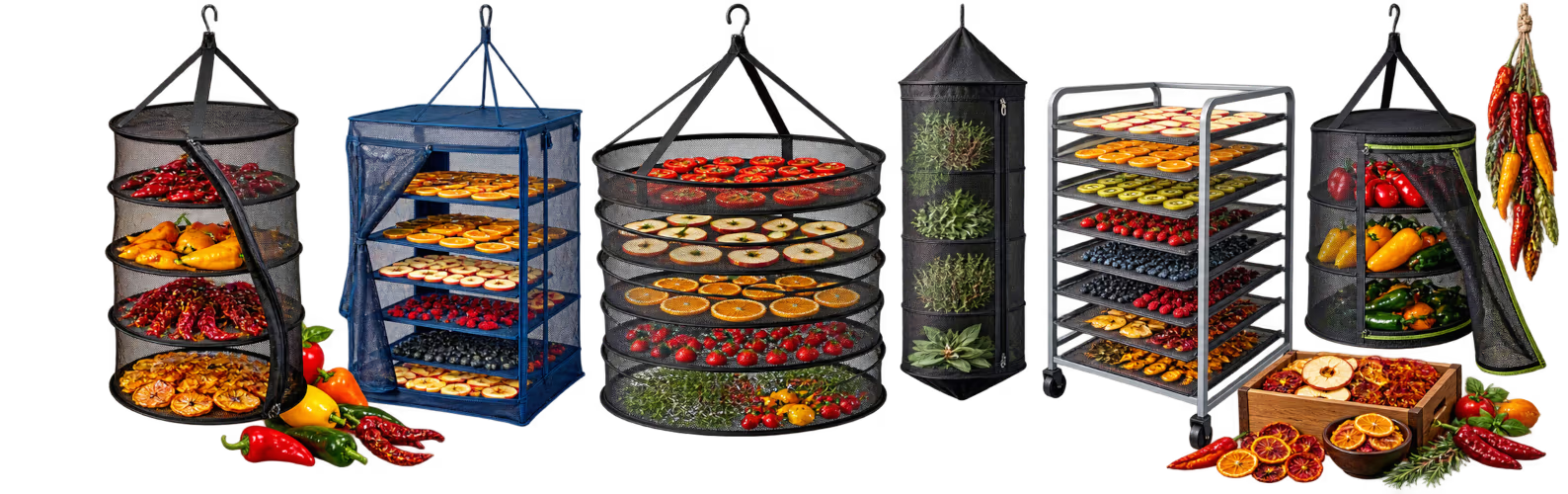
Net or rack, and why you usually need one
Both solve the same thing: air has to reach everywhere and nothing may lie on top of anything else. Where they differ is in the space they cost.
Drying nets hang and stack vertically, often several layers above each other, so they use no floor area. They also fold away when not in use. Drying racks stand on a surface and are more rigid, which is easier if you need frequent access. In both cases usable capacity is smaller than it looks: overfill a layer and the material touches itself, and the underside does not dry with the rest.
The scissors are the tool you spend hours with
With a single plant it hardly matters. With more than one, a pair of trimming scissors is the difference between an afternoon and several days, and between a comfortable hand and a sore one. This is the purchase here where economising costs you fastest.
The choice is mostly shape. A curved blade suits rounded work, a straight one is more precise for straight cuts, and a narrow model reaches further into dense material. Garden Highpro carries all three, and there are lighter scissors with soft grips that mainly pay off over long sessions. Resin gums the blades as you go: clean them along the way and the last plant cuts as easily as the first.
Where you dry
The obvious space is the tent that has just been emptied. That works well, provided you keep it dark and leave extraction running at a lower speed rather than switching it off: you want air exchange without creating a drying gale. Turning it down is covered under Measuring & Control, the extraction itself under Climate & Ventilation.
Think about smell too. Drying releases more of it than the grow did, so this is not the moment to take the carbon filter out because the plants have come down.
Frequently asked questions
How long should drying take?
Plan on a good week rather than a few days. Faster costs aroma and flavour; slower turns risky as soon as humidity stays too high. Go by how the material feels rather than by the calendar alone.
Can I dry in my grow tent?
Yes, and it is the logical place. Keep it dark, leave extraction running at a low speed, and do not aim a fan straight at the material.
Why does my harvest smell like hay?
That is the classic sign of drying too fast or too warm. It cannot be undone afterwards, and it is why this stage should run far slower than it feels like it should.
Curved or straight scissors?
Curved suits rounded work, straight is more precise on straight cuts. People who trim a lot often keep both and alternate, partly to rest the hand.
Net or rack?
A net if you have height and want to save floor area, a rack if you need frequent access and want it rigid. Either way, do not overfill: material touching itself does not dry evenly.