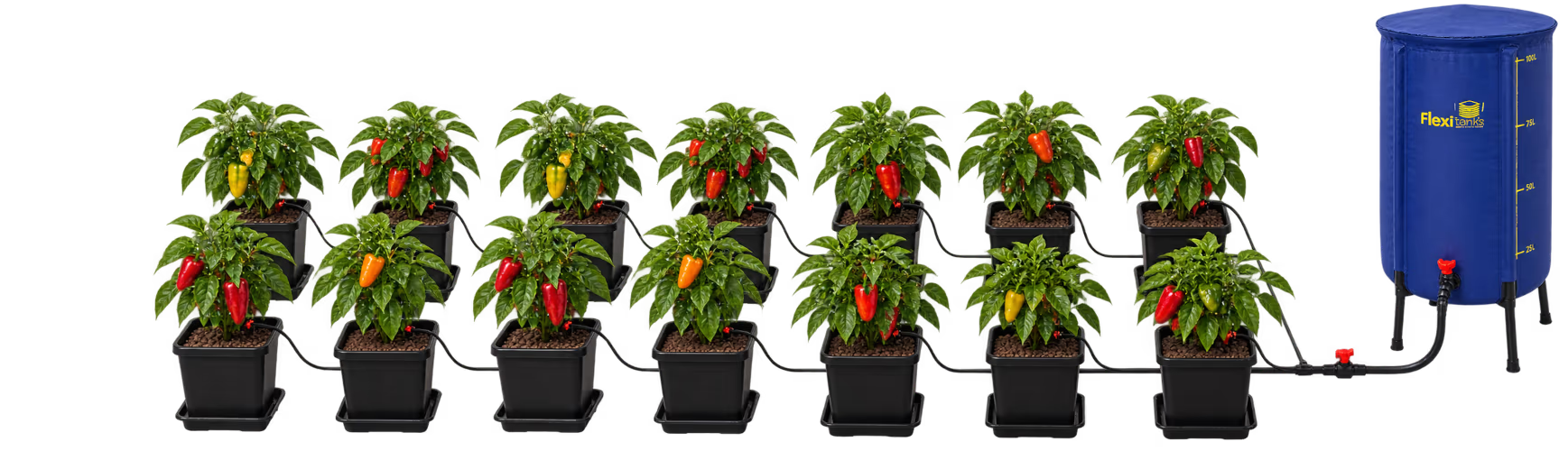
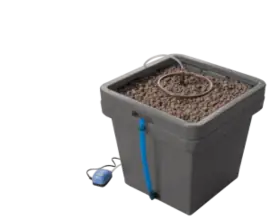
A growing system takes watering off your hands, and with it the largest source of swing in a grow. Watering by hand inevitably produces peaks and troughs in how wet the pot is. A system keeps that line flat, and flat is what roots want. The second benefit only shows later: a system scales. Watering ten plants by hand is work; watering ten plants on a system is the same action as watering one.
First the question that decides everything: power or no power
The systems here fall into two families, and the difference is not price but what happens when something fails.
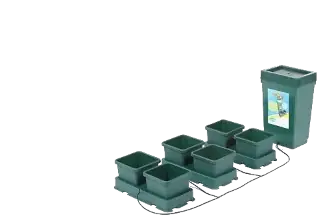
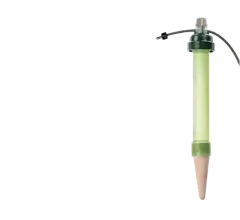
Blumat runs without a pump and without power. A ceramic cone in the pot passes water as the substrate around it dries and closes again once it is wet, so the plant sets its own rate. There is no timer to set wrongly and no pump to fail. AutoPot is also unpowered, using a float valve that fills a tray under the pot and only reopens once it has run dry. That gives a distinct wet-dry cycle rather than constant moisture.
Active systems do need power. They can do more, but a failure is immediately a problem, and that is precisely the trade.
What makes DWC different
In DWC the roots hang permanently in aerated nutrient solution. There is no substrate to absorb a mistake and no dry period, so growth is fastest and the margin for error smallest. Lose aeration and you have hours, not days, to fix it.
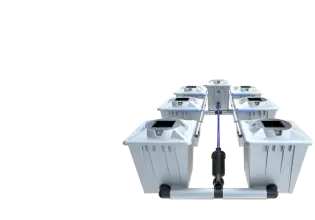
That does not make DWC difficult, but it does make it demanding: you measure more often, you watch water temperature, and you keep spares to hand. Growrilla supplies the recirculating setups here, where the buckets are linked so every plant drinks from one reservoir and you only have to measure and correct in one place.
Drip sits between the two
Drip systems deliver a measured amount at set times, so you set the rhythm rather than the plant. That suits coco and rockwool, where little and often is what you want, and it scales easily to a lot of plants.
The trade-off is that an emitter can block, and you notice it in a plant falling behind rather than in the system. Filtration and periodic flushing are part of the deal, and system cleaners sit under Nutrients.
Parts are not an afterthought here
System parts is one of the largest groups at forty products, and that is deliberate. Tubing in several diameters, tees, elbows, connectors, pressure reducers, tank feed-throughs and individual sensors or float valves are all sold separately.
That makes a system here something you extend rather than a sealed product. Going from four plants to eight means buying parts, not a second system. It is also the reason to check, before you buy, whether your brand's parts are available individually.
What the system stands on
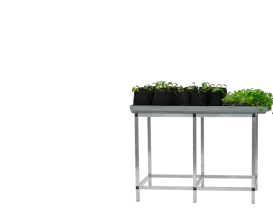
Grow tables from G-Tools and AutoPot catch runoff and drain it away, keep your floor dry and put plants at working height. With a system that feeds from below, the table is not furniture but part of the water handling. Terra Aquatica also supplies complete setups, from a single bucket to arrangements that run across a table.
The water itself, meaning tanks, pumps, heating and chilling, is under Water & Irrigation. The pots many of these systems are built around are under Pots & Trays.
Frequently asked questions
Can I go away for a weekend with a growing system?
With an unpowered system and a tank large enough, yes. That is exactly what Blumat and AutoPot are built for. With an active system it depends on what happens if the pump stops while you are not there.
Does Blumat work in coco?
The cone responds to moisture tension in the substrate around it, so it behaves most predictably in a medium that holds moisture, such as soil and coco. In a medium that holds almost none, like clay pebbles, a system that keeps dosing on its own is the better fit.
Which system is least sensitive to mistakes?
An unpowered system in soil. The substrate buffers and there is no pump or timer to get wrong. DWC sits at the other end of that scale: the fastest, and the least forgiving.
Can I expand later?
Yes, and that is why the parts are sold separately here. Before buying, check that expansion sets exist for your system and that tubing and fittings keep the same size.
Do I still need nutrients with a system?
Certainly. A system moves water; it does not make feed. With recirculating systems you also watch pH and EC more closely, because a mistake gets pumped around just as thoroughly as the nutrient does.