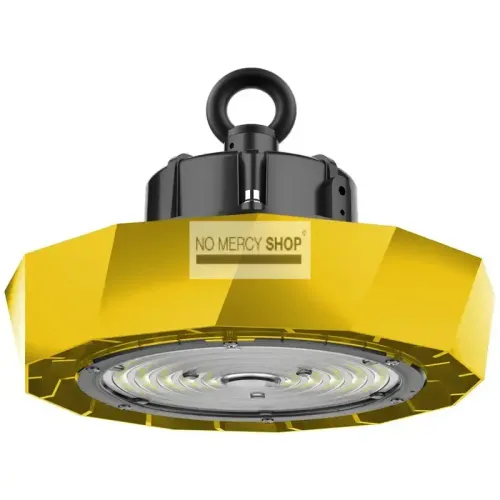
An 80x80 is nearly twice the area of a 60x60, and it calls for roughly 150 to 250 watts of LED or a 400 watt discharge lamp. It is also the first size at which choosing between those two routes stops being mainly about purchase price and starts being about what you do with the heat.
LED, and where the brands differ
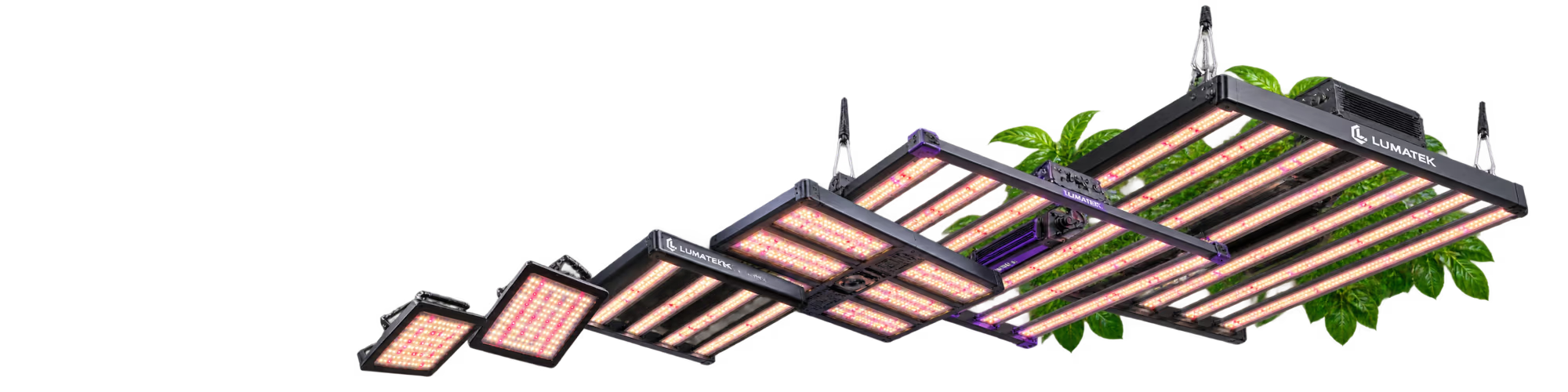
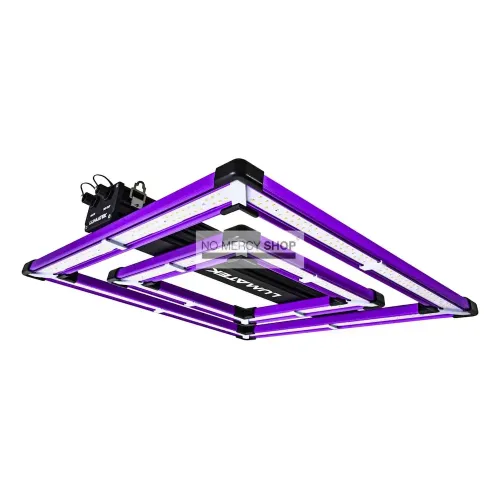
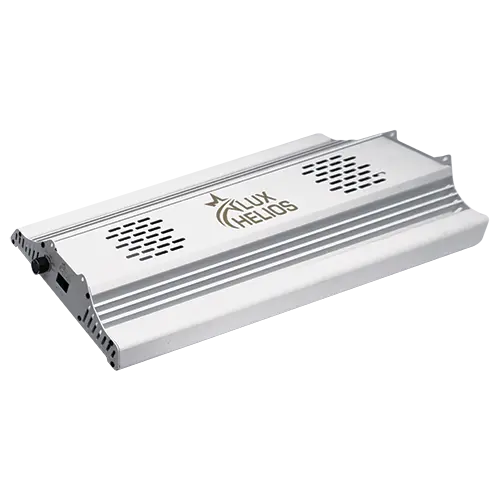
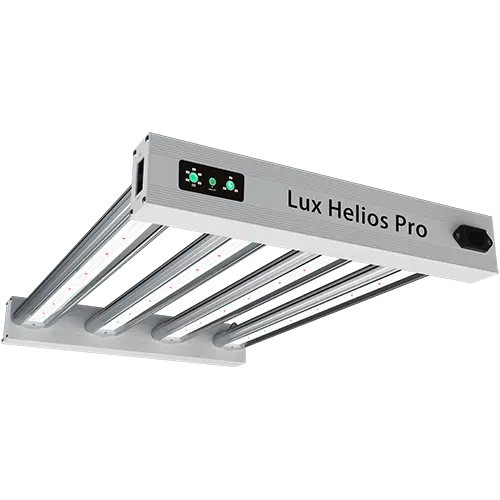
The Lumatek ATS 200W Pro is passively cooled, so silent and with no fan to seize. The Spectrabox UFO 150W is compact and penetrates deeply from one point. The Mars Hydro TS-1000 is the value entry. And from Lux-Helios there are the LED 200W and the Pro 240W, both stating 2.8 µmol/J, with the Pro 240W rating 80x80.
Discharge lamps are best represented here
Fertraso and Sylvania both supply 250 and 400 watts, and Fertraso additionally the 250 watt HPIT metal halide, whose bluer spectrum is used mainly in the vegetative phase. Allow for these being bare lamps: a reflector goes with them, and we do not stock the fitting.
The heat is the real difference
A 400 watt discharge lamp turns a large share of that power into heat, and over 0.64 square metres that heat has little room to go. In winter it saves you a heater; in summer it costs you more extraction than the tent volume alone would call for. Add that extraction to the purchase price before comparing the two routes.
Choose on stated coverage where there is one
Not every product page gives a coverage figure. Where it is stated, it is the most reliable number to choose on; where it is missing, go by wattage and by the shape of the fixture. A lamp rated for your size works better than a heavier one you have to hang higher.
Frequently asked questions
LED or HPS at this size?
LED if your electricity use and summer temperatures count, HPS if purchase price decides and you can shed the heat. With HPS, count in the reflector and the extra extraction.
Do I need metal halide alongside HPS?
Not necessarily. MH gives a bluer spectrum for the growth phase, but many growers run the whole cycle on HPS. With LED the question does not arise, since it covers both stages.
How many watts exactly?
Take the stated coverage as your guide rather than the wattage alone. Fixtures of equal power can serve very different areas.