Light drives your yield more directly than any other part of the setup, and it is also the part with the loudest advertising. The number that matters is not the wattage on the box but how much usable light lands on your plants and how evenly it spreads.
Watts tell you the cost, not the output
A 300 watt fixture tells you how much power it draws. How much light it makes comes from two other figures. PPF is the total usable light it emits per second, in micromoles per second. Efficacy is that PPF divided by the wattage, in micromoles per joule, and that is the number that lets you compare two fixtures fairly: at 2.8 micromoles per joule you get more light out of every watt than at 2.0.
Two fixtures of the same wattage can therefore differ substantially in what grows under them. And an efficient lamp hung too high, or too small for your area, gives that advantage straight back at the edges.
Size the lamp to the area
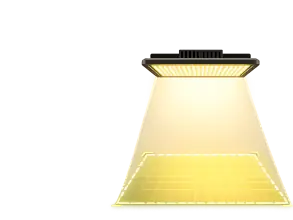
Manufacturers publish a recommended coverage area per fixture, usually separately for veg and for bloom, because a flowering plant asks for more light. Start from that figure rather than from the wattage. You can filter on it directly here: 60x60, 80x80, 100x100, 120x60, 120x120 and 150x150 show only the lamps that suit that footprint.
Shape matters alongside output. A bar fixture spanning the whole area spreads light more evenly than a single source in the middle, and that difference shows in the corners of a tent, where a point source leaves the lower buds behind.
LED is the standard, and HPS is not here out of nostalgia
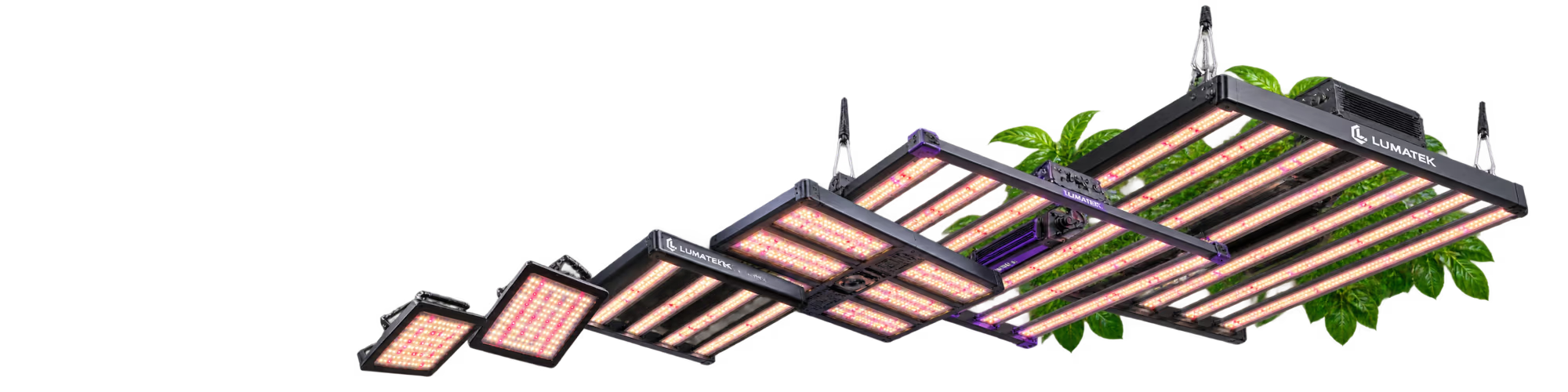
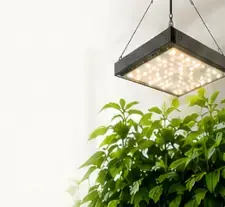
LED grow lights make up most of this range: Mars Hydro FC EVO and FC-E, AC Infinity IONFRAME EVO, Lumatek Zeus Pro, ViparSpectra KS and XS and Lux-Helios, from small panels to fixtures above 700 watts. They run cooler, get more light out of the same power, and are nearly all dimmable, which is what cuttings and young plants need.
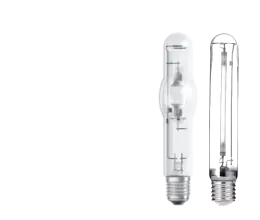
MH and HPS lamps are still stocked, in 250, 400 and 600 watts from Fertraso and Sylvania. They cost less up front, and in a cold room the heat they throw is useful rather than a problem. Budget for heavier extraction, and for replacement: the output of a discharge lamp falls off while its consumption stays the same, so a lamp that still lights is not automatically a lamp that still delivers. Metal halide runs a cooler spectrum suited to veg, HPS a warmer one for bloom.
The parts that decide whether it works
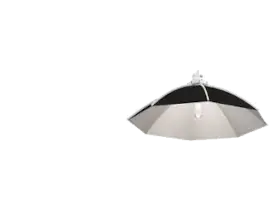
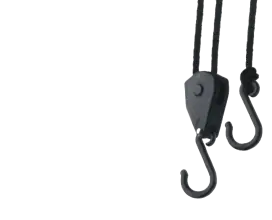
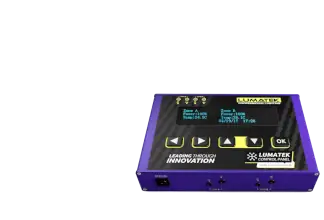
A lamp rarely hangs alone. Hanging systems with a ratchet let you adjust height weekly without unhooking the fixture. Power supplies and drivers belong to separate LED modules and to fixtures whose driver hangs apart. Dimmers and controllers let you run several lamps as a group instead of turning a dial on each one. Reflectors push light that would otherwise fall past the plant back down.
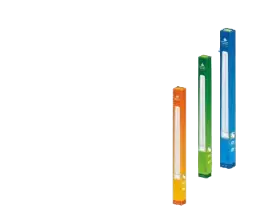
Alongside those sits supplemental lighting: narrow bars in ultraviolet, infrared or a grow or bloom spectrum, made to hang beside the main fixture or along the side of the canopy. And fluorescent for cuttings and seedlings, which want little light and little heat.
Frequently asked questions
How many watts do I need for my tent?
Do not start from watts. Take the coverage area the manufacturer states for that fixture and compare it with your own, then use efficacy in micromoles per joule to compare two candidates. Filtering by footprint above is the fastest route.
What does micromoles per joule mean?
It is the amount of usable light a fixture makes per watt it consumes. The higher the figure, the more light you get for the same electricity bill. It says nothing about distribution, so read it together with the stated coverage area.
How high should my lamp hang?
Follow the height the manufacturer gives per stage. Too high costs you light at the edges, too low bleaches the tops. Since that height moves with the plants, a ratchet hanger is not a luxury.
Is LED always better than HPS?
On power draw and heat, yes. On purchase price, no, and in a cold room the heat from HPS is usable rather than a nuisance. With HPS, plan for heavier extraction and for replacing the lamp periodically.
Do I need ultraviolet or far red?
No. It is supplemental, not a substitute. Get the main fixture covering the area at the right height first, then consider whether a narrow bar earns its place beside it.
Can I dim several lamps at once?
Yes, where the fixtures can be daisy chained. You link them with a control cable to a controller and run them as a group rather than adjusting each lamp by hand.